


UNODC estimates that 2–5% of global GDP, as much as $2 trillion, is laundered each year globally.
What’s more, regulators are cracking down on AML violations and superficial compliance. Fenergo dished out $1.23 billion in regulatory fines in the first half of 2025, nearly 5 times what regulators collected the previous year.
AML compliance software has become a baseline for financial institutions. They help screen and validate the identity of who you’re working with against watchlists, track the movement of money, and flag things well before a regulator gets involved.
However, choosing the right AML compliance solution is easier said than done. In this article, we’ve put together a list of 8 AML compliance platforms based on user ratings and reviews from third-party review sites.
What does AML software do?
The ideal AML compliance software helps businesses meet anti-laundering requirements. Additionally, these platforms also help financial institutions establish the five pillars of AML compliance, such as:
- Customer Due Diligence: Screening a person or business against sanctions lists, politically exposed person (PEP) databases, and adverse media before the onboarding process. Performing know-your-business checks on companies and their beneficial owners.
- Designated Compliance Management: Setting up rule-based workflows that help qualified AML compliance officers manage day-to-day AML affairs like compliance tracking and audit management, while other users gain access on a need-to-know basis.
- Internal Policies and Controls: Automating internal and regulatory policy execution while empowering real-time transaction monitoring that flags unusual money movements. Detecting patterns such as structuring and layering, which are often used by threat actors.
- Automated Compliance Cycles: Regular rescreens of existing customers against databases, along with frequent training programs to empower all staff members and keep them up to date about new threats, red flags, and regulatory norms.
- Frequent Testing (Internal and External): Automating reminders that help facilitate timely internal audits to detect, track, and flag illicit transactions while enabling external specialists to validate the AML program’s effectiveness.
Top 8 AML compliance software at a glance
Most AML compliance tool lists club screening tools and monitoring tools in the same category. However, they cannot be more different in terms of the problems they solve, the user bases they cater to, and the functional needs they fulfill.
While some vendors lean towards identity-related AML compliance, a few focus on watching how money moves after onboarding. Here’s a comparison of the top 8 AML compliance tools that will give you a clear idea of the strengths and weaknesses of each tool.
| Vendor | Best for | Transaction monitoring | Sanctions, PEP, adverse media screening | Business (KYB) verification | AI risk scoring | Case Management | Deployment |
|---|---|---|---|---|---|---|---|
| Know Your Customer | Corporate KYB and cross-border onboarding | Limited | Yes | Yes, strong | Yes | Yes | Cloud, API |
| ComplyAdvantage | Sanctions and adverse media screening | Yes | Yes, strong | Partial | Yes | Yes | Cloud, API |
| Sumsub | Global identity and KYC/AML onboarding | Add-on | Yes | Yes | Yes | Yes | Cloud |
| Sanction Scanner | Screening plus monitoring at fair pricing | Yes | Yes, strong | Partial | Yes | Yes | Cloud, API |
| Unit21 | Custom fraud and AML rule building | Yes, strong | Partial | No | Yes | Yes, strong | Cloud |
| NICE Actimize | Enterprise banking at scale | Yes, strong | Yes | Yes | Yes | Yes | Cloud, on-premises |
| Napier AI | Deployment flexibility, on-premises option | Yes | Yes | Partial | Yes | Yes | Cloud, private cloud, on-premises |
| Hawk AI | Explainable, audit-ready alerts | Yes, strong | Yes | No | Yes, strong | Yes | Cloud |
The 8 best AML compliance software platforms in 2026
Listed below are 8 sought-after AML compliance solutions, in no particular order. For each entry, we’ve dug into what each platform does, who it is made for, and the specific concerns users express in their reviews.
1. Know Your Customer
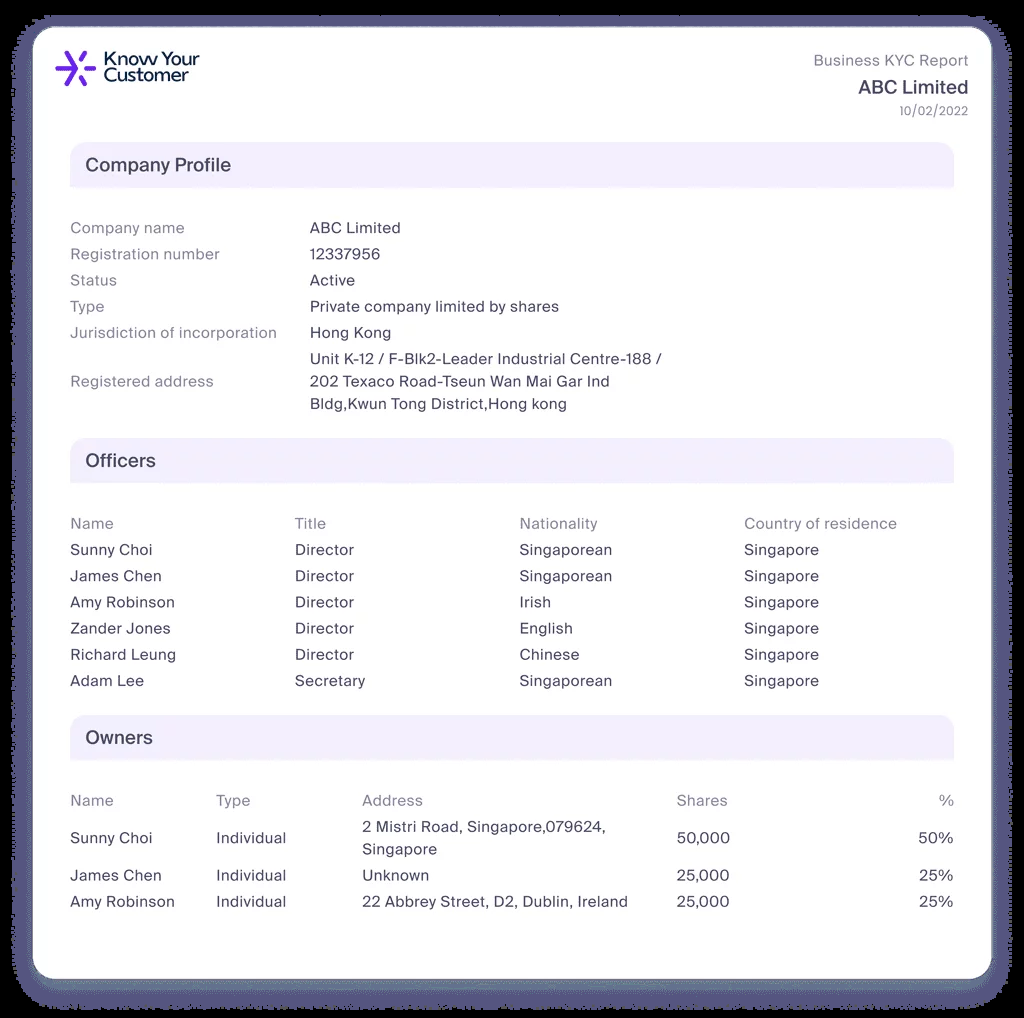
Know Your Customer, the gold standard for KYC and KYB, verifies not only the identity of the person who signed the form but also the actual business behind the account. Its KYC Workspace brings KYB, KYC, and AML reviews together in one place by connecting to live registries across more than 140 countries.
As a result, compliance analysts need not send back-and-forth emails to a foreign corporate registrar to confirm a shareholder structure or identify stakeholders. Trusted by clients such as DBS Bank, Standard Chartered, and Coda Payments, it also partners with industry leaders such as LexisNexis and the London Stock Exchange Group to provide registry data.
- Broadest coverage of real-time registries across the world
- AI, ML, and NLP-powered compliance processes
- Audit-readiness backed by regular KYC, KYB, and AML checks
| Pros | Cons |
|---|---|
| Registry coverage useful for cross-border corporate onboarding | There is a slight learning curve, which takes users a while to get used to the system. |
| Fast, professional customer service from first contact | Small number of public user reviews available |
| Strong fit for KYB-heavy workflows like SME lending |
Best for: Financial institutions, lenders, and service providers who are looking for business verification depth while centralizing and automating their due diligence process.
2. ComplyAdvantage
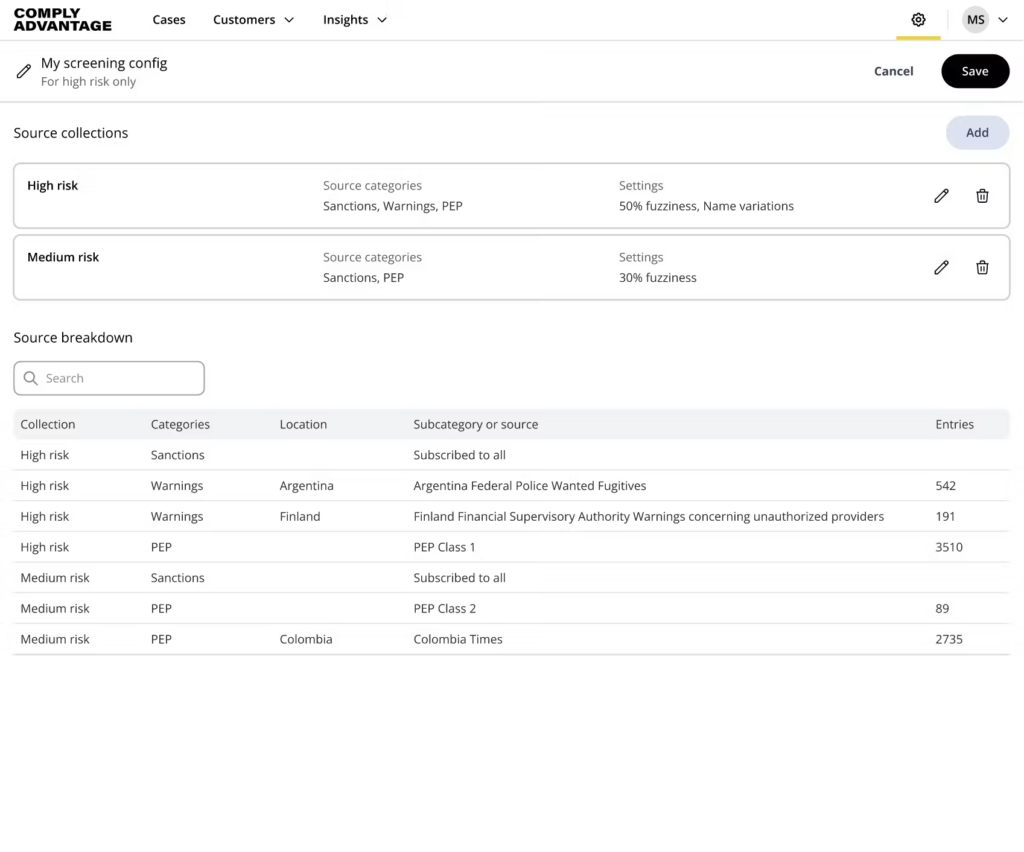
ComplyAdvantage offers a bundle of features, including sanctions screening and PEP checks, adverse media checks, transaction monitoring, and case management, all in a single dashboard. Their sub-second screening response time is something reviewers often point to.
Most reviewers report reducing false positives by up to 82 percent after adjusting how strictly the platform matches names.
- Real-time sanctions, PEP, and adverse media screening
- Adjustable name-matching sensitivity
- Case management built into the same dashboard
- Serves more than 3,000 customers, from neobanks to large processors
| Pros | Cons |
|---|---|
| A clean, intuitive surface that enhances user experience | Some users report that the tool keeps logging out every time they end a session on the PC |
| Responsive account management, building relationships with customers | The search tool is said to pop up false positives, leading to an efficiency hit and manual reviews |
| With a smooth and predictable integration process, the solution is said to scale well | Room for improvement in audit transparency and flexible analytics |
Best for: Banks and fintechs that need adverse media screening, PEP, and sanctions as part of their core AML compliance, but also transaction monitoring layered on top.
3. Sumsub
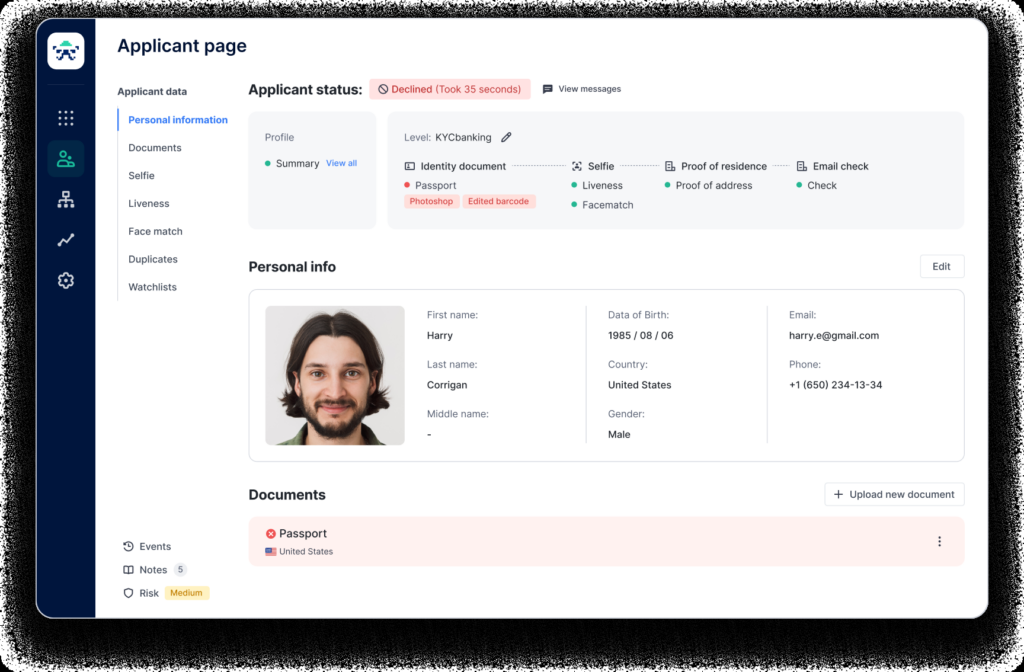
Sumsub started its AML compliance journey as an identity verification tool and has since grown into a full KYC/AML suite covering document checks, biometric verification, business verification, and transaction monitoring. Reviewers consistently call out the interface as one of the easier ones to hand to a non-technical compliance team.
- AI-powered trust infrastructure for compliance operations at scale
- Business (KYB) verification alongside individual KYC
- Transaction monitoring and fraud prevention add-ons
- Coverage across a large number of countries and document types
| Pros | Cons |
|---|---|
| Reviews applaud their combo of performance and functionality supported by ease of use | Some users claim that duplicate accounts often go undetected due to various factors |
| Summy AI automations and the updated dashboard help improve efficiency | Few limitations that prevent adequate access of control configuration and threshold settings |
| Fits well into the existing tech stack, delivering near-instant verification | Lack of transparency on the compliance logic |
Best for: Fintechs and crypto platforms handling high-volume onboarding across many verticals at once.
4. Sanction Scanner
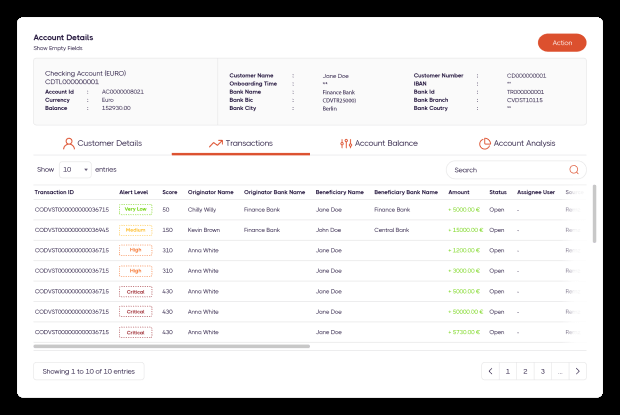
Sanction Scanner is an AI-native risk intelligence platform that streamlines decisioning and anomaly detection to help with fraud prevention. Its proprietary AI stack, Fusion, automates the compliance lifecycle by fusing name screening, sanctions, PEP, adverse media, and customer risk assessment into a single dashboard.
- Unifies multiple AML capabilities in one dashboard, offering a unified risk score
- Built-in agents that assist compliance teams every step of the way
- Trusted by 800+ institutions across 220+ countries to combat financial fraud
| Pros | Cons |
|---|---|
| Users consistently praise the platform’s ease of use and real-time screening feature | Minor delays during peak usage times |
| Multi-functional nature which helps create reports easily | Inflexible advanced customization capabilities |
| Experienced customer support team that aids in times of need | Occasional documentation lag for new features |
Best for: Small to mid-sized fintechs, crypto exchanges, and payment companies that need strong screening without opting for the enterprise plan.
5. Unit21
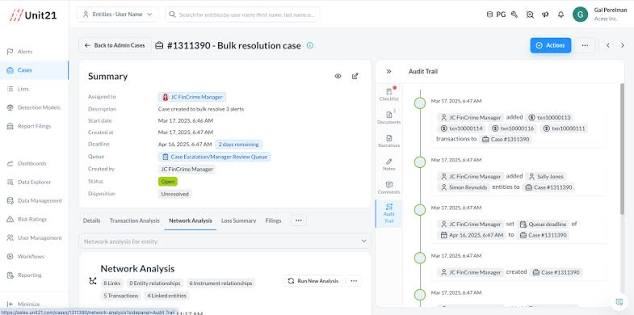
With Unit21, analysts can build custom detection rules without engineering help. The platform recently added an agentic AI layer that is capable of running an entire investigation on its own, from the initial alert, which an analyst can hand straight to a regulator. Reviewers report measurable year-over-year drops in fraud losses after adoption.
- No-code custom rule building capability
- AI-run investigation workflows, alert-to-case narrative
- Combined fraud and AML monitoring in one environment
- Built for teams that want to own their own detection logic
| Pros | Cons |
|---|---|
| Options for rule validation, replication, and shadow mode to build custom detection logic | The necessity of knowing the data and processes well enough to build things from the ground up |
| No-code rule and risk score customization designed with compliance teams in mind | CTR workflows appear to be more manual than users expected them to be |
| Quality of alerts and clear prioritization that help compliance teams focus on real risks | AI features not capable enough to write case narratives |
Best for: Enterprise banks, fintechs, and crypto companies with dedicated compliance teams that know their data well enough to build their own detection logic from scratch.
6. NICE Actimize
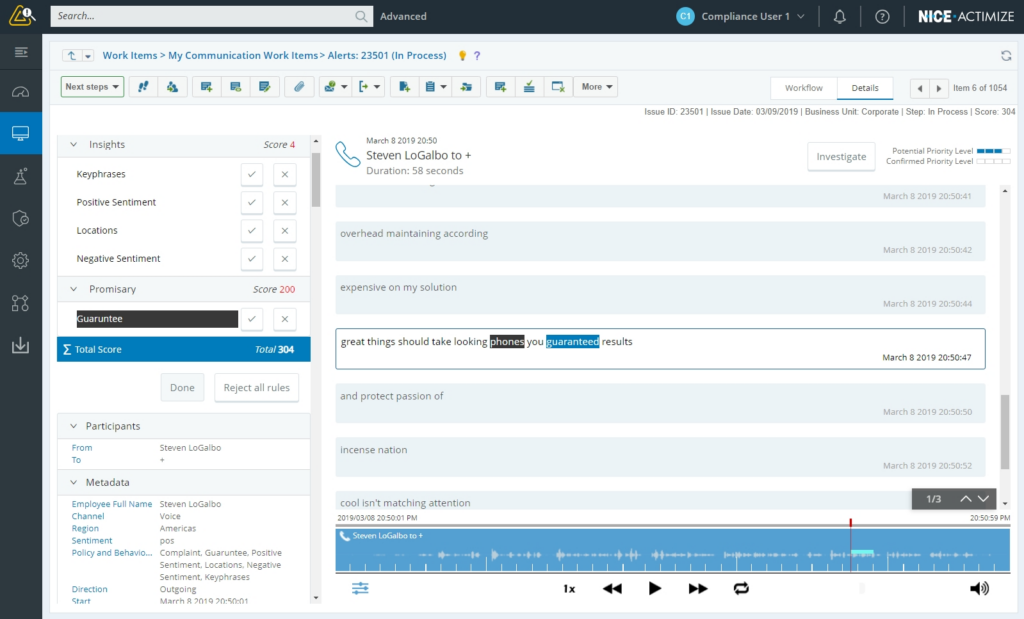
NICE Actimize is the name most large banks already know, and reviewers say that familiarity is part of the value. Reviews often call out its extensive AML models and how easy it is to find people who already know how to run it. It’s built for high transaction volumes and complex corporate banking.
- Comprehensive AML compliance coverage and auditability at enterprise scale
- Deep customization for multi-jurisdiction operations
- Large existing talent pool trained on the platform
- Handles high transaction volumes without degrading
| Pros | Cons |
|---|---|
| Leading software in data management related to AML and fraud | Has a strong learning curve and slow implementation due to its integrated nature |
| Offers an integrated experience by covering the entire spectrum of AML compliance | The tiniest errors have the capability to disrupt features and halt operations |
| The depth of information available about the platform | The front end can be a bit of a mess with small fonts and feature bloat |
Best for: Large financial institutions with significant revenue and cross-border operations that need an AML and fraud detection engine that’s been proven to deliver efficiency at scale.
7. Napier AI
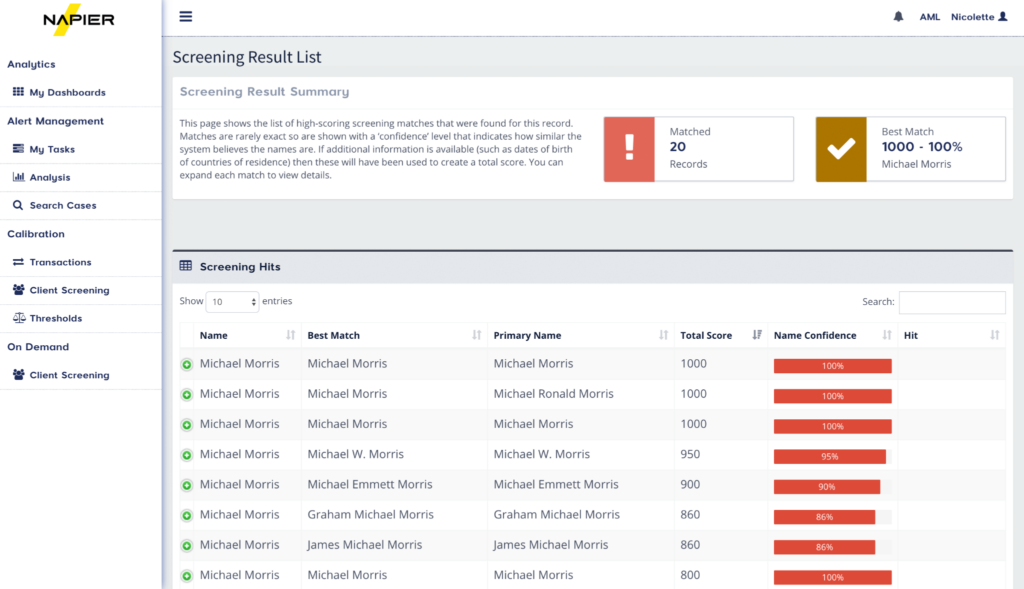
Napier AI is a next-gen AML solution that helps institutions amp up for tomorrow’s threats. It automates client screening and transaction monitoring with AI models built to reduce both false positives and false negatives. It can be deployed across cloud, private cloud, or on-premises, which matters for institutions with strict data residency rules.
- Helps transform regulatory obligations into a competitive edge
- Powered by four key proprietary technologies and AI/ML
- Helps compliance teams make decisions with accuracy and speed
| Pros | Cons |
|---|---|
| Simplifies the KYC and AML compliance cycle | Demands intensive initial training to unlock the power of the platform |
| Flexible deployment options | Inadequate training of partners becomes a bottleneck for customers inadvertently |
| Seamless integration with other compliance portals |
Best for: Mid-sized institutions that need deployment flexibility and an on-premises option without investing in a full enterprise suite.
8. Hawk AI
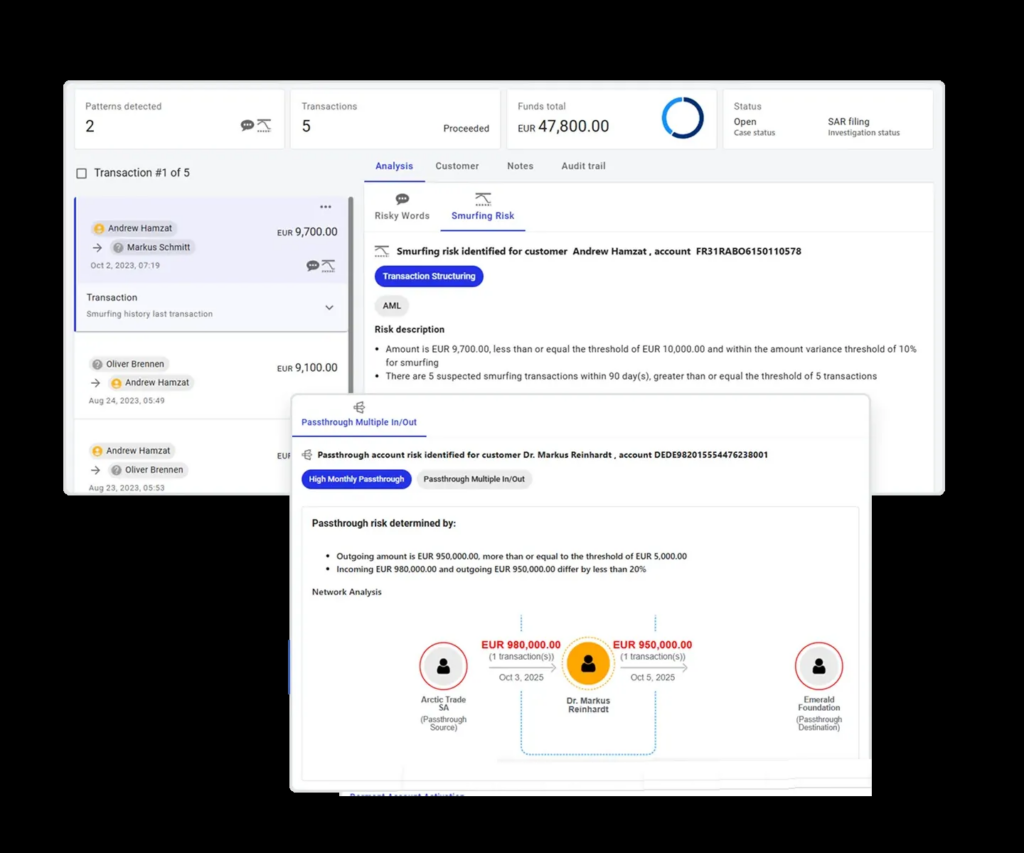
Designed for FIs and regulated entities, Hawk AI reduces false positives and surfaces real threats. Its explainable AI walks compliance officers through the decision-making process. This transparency comes in handy when compliance officers need to walk regulators through their AML process.
- Supports gradual AI adoption
- Offers flexible implementation options
- Cross-institution pattern sharing
| Pros | Cons |
|---|---|
| Hybrid rules powered by its ML architecture | Low vendor maturity compared to other products on the list |
| Strong explainability features that help in regulator conversations | ML effectiveness is said to depend on transaction volume and data label quality |
| Swift, cloud-native deployment |
Best for: Tier-one and mid-market banks that need transaction monitoring decisions they can defend to a regulator.
How to choose the right AML compliance software for your business?
Start with what you’re actually being regulated for.
A bank running high transaction volume needs monitoring depth first and screening second. A fintech onboarding customers across 40 countries needs identity and business verification coverage first and monitoring second. Buy the wrong one first, and your compliance teams end up running two platforms, underutilizing yet paying for both.
Check the deployment model against your data residency rules. Some regulators, especially outside the US and EU, require data to stay on local infrastructure, which will rule cloud-native vendors pretty quickly out of the equation.
Ask about false positive rates before you sign anything. Most AML vendors face a version of the same complaint in reviews, which happen to be alerts that turn out to be nothing, eating analyst hours. The vendors that publish real numbers on false positive reduction may be a better choice than those that do not.
And read the review sites directly before you buy. The honest, real customer reviews and complaints tell you more than the pull quotes on the homepage ever will.
Frequently asked questions
What is the difference between KYC and AML software?
KYC (Know Your Customer) software verifies who a customer is at onboarding. AML software is the broader category, KYC plus transaction monitoring, sanctions screening, and case management for the life of the relationship. Most vendors on this list, including Know Your Customer, ComplyAdvantage, and Sumsub, cover both.
How much does AML compliance software cost?
Pricing varies widely, and most vendors don’t publish it. Some vendors price per feature or record, while others offer tier-based pricing. Enterprise platforms often require a sales conversation, and costs scale with transaction volume and the number of modules you need.
Which AML compliance software is best for small businesses and startups?
Sanction Scanner and Know Your Customer both get called out in reviews as strong fits for smaller teams, largely on pricing and setup speed. Sumsub and ComplyAdvantage work too, but several reviewers flag their pricing as steep once a company scales past its first few hundred customers.
Do I need separate tools for KYC, transaction monitoring, and sanctions screening?
Not always. Know Your Customer, ComplyAdvantage, Sanction Scanner, and Sumsub bundle most of it into one platform. If you need best-in-class transaction monitoring specifically, Unit21, Hawk AI, and NICE Actimize are built around that as the core.
Last updated on September 11th, 2026 at 11:38 am
